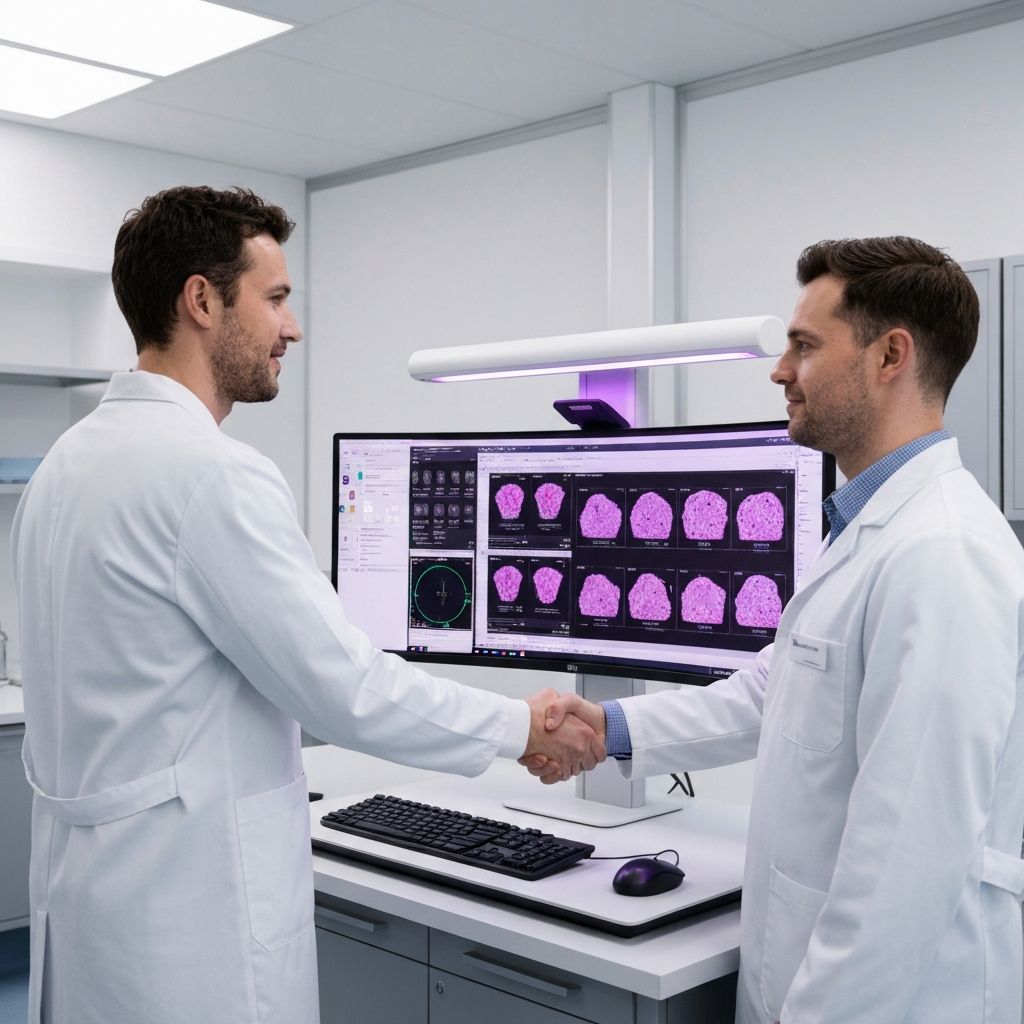
Research-grade AI and clinical-grade AI are not the same thing, and the gap between them is wider than most people realize. A model that performs well on a held-out test set is an interesting result. A model a pathologist will sign out on is a product. The distance between those two things is measured in years of engineering work, not months.
What actually goes into clinical grade
- Multi-site validation, with cases held out by site, scanner, and preparation protocol.
- A quality management system that is audited and lives under change control.
- Regulatory-grade documentation, tracing every line of production code back to a design input.
- A continuous monitoring pipeline that detects drift in real time and escalates before it affects results.
- An incident response process rehearsed the same way any clinical system is rehearsed.
Every one of these is invisible to the pathologist sitting in front of the workstation. They should be invisible. But every one of them has to be in place before the first click happens.
The underestimated part: slide preparation drift
Pathology AI lives or dies on the quality of upstream slide preparation. A change in fixation time, a new batch of stain, or a different scanner vintage can all shift the distribution the model sees at inference time. Clinical-grade systems have to detect this automatically. Research systems do not even know to ask.
The question is never whether your model is accurate. The question is whether you will notice the day it stops being accurate.
How we think about it
Our internal rule is simple. A model does not go into a clinical workflow until it has survived three months of shadow-mode deployment at the exact site that will use it. Shadow mode means the model runs on every real case in parallel with the pathologist, and we compare the two outputs every day. If the shadow deployment passes, clinical deployment is almost boring. If it does not, we learn why before a patient is ever affected.